November 5, 2026
First-Time Home Buyer Ottawa: Freehold Townhome Strategy
Navigate the Ottawa freehold townhome market. Learn how first-time buyers evaluate Leda clay, mechanical lifecycles, and hidden costs with clarity.
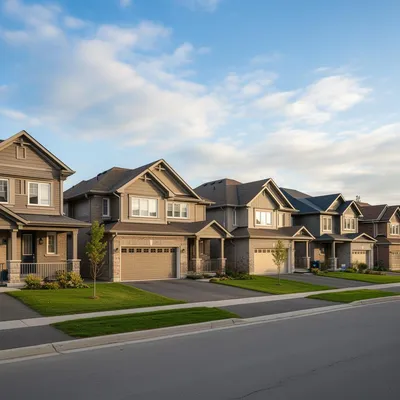
For anyone entering the market as a first-time home buyer Ottawa presents a distinct set of geographical, structural, and financial realities. While national headlines often fixate on generic Canadian averages, purchasing entry-level real estate in the National Capital Region requires a granular, localized playbook. In Ottawa, entry-level freehold ownership is dominated by two-storey and three-storey row townhomes built between 1985 and 2010 by high-volume production builders like Minto, Urbandale, Tartan, and Richcraft.
Freehold townhomes represent the strategic sweet spot for new buyers. They offer predictable asset appreciation without the monthly condo fees that can compress debt-service ratios under the Office of the Superintendent of Financial Institutions (OSFI) stress test. However, navigating this tier requires looking well past cosmetic renovations to evaluate structural substrates, legacy mechanical systems, and municipal tax mechanics. Our broader analysis across neighbourhood sectors can be explored through our Ottawa market insights and analytical reports.
---
The True Capital Requirement: Beyond the 5% Down Payment
Many entry-level purchasers plan their finances around the statutory minimum down payment: 5% on the first $500,000 and 10% on the portion between $500,000 and $999,999. In Ottawa, where a functional three-bedroom, two-bathroom freehold townhome typically trades between $515,000 and $640,000 depending on the enclave, your gross down payment generally sits between $26,500 and $39,000.
However, a resilient purchase strategy accounts for non-mortgageable closing costs and post-closing liabilities:
- Ontario Land Transfer Tax (LTT): First-time buyers in Ontario receive a maximum provincial rebate of $4,000. On a $550,000 freehold purchase, the gross LTT is $7,475. After the $4,000 rebate, you must deliver $3,475 in cash at closing. Unlike Toronto, Ottawa does not levy an additional municipal land transfer tax.
- CMHC / Sagen / Canada Guaranty Premium: Default insurance premiums range from 2.80% to 4.00% of the loan amount when putting down less than 20%. While this fee is rolled into the principal mortgage, the 8% Ontario provincial retail sales tax (RST) on the insurance premium is not. It must be paid in cash through your real estate lawyer upon closing.
- Legal, Title Insurance, and Disbursements: Budget $1,800 to $2,400 for standard conveyancing, writ searches, and comprehensive title insurance through providers like Stewart Title or First American.
- Immediate Reserve Fund: An entry-level buyer should retain a liquid post-closing reserve of at least $5,000 to $10,000 to manage immediate maintenance realities, particularly in properties aged 20 years or older.
---

Navigating Structural and Soil Realities for the First-Time Home Buyer in Ottawa
Understanding the physical environment beneath an Ottawa foundation is critical for long-term value preservation. Significant portions of the Ottawa River basin and eastern valleys sit on Champlain Sea deposits, commonly known as Leda clay. This marine clay is sensitive and subject to volume changes based on moisture levels.
In neighbourhoods like Convent Glen, Chapel Hill, Queenswood Heights, and sections of Greenboro or Blossom Park, prolonged dry summers can draw moisture out of the clay, causing volumetric shrinkage. When combined with mature silver maples or ash trees drawing ground moisture near foundations, localized settlement can occur. As a buyer evaluating older townhome rows in these zones, you must verify:
- Poured concrete foundations versus concrete block (prevalent in pre-1980 builds).
- Hairline cosmetic shrinkage cracks versus stepped, diagonal settlement cracks through the foundation wall.
- Whether the weeping tile system has been scoped or updated, and whether a sump pump with a battery backup system is present.
- Negative lot grading where surface runoff from adjoining private roofs drains directly toward your foundation.
---
Mechanical Lifecycles and Latent Liabilities
When touring entry-level townhomes in established suburban rings, cosmetic updates such as quartz countertops and freshly painted MDF cabinetry often obscure aging capital components. A prudent purchase requires systematically cataloguing mechanical systems against their replacement cost horizon.
The Hot Water Tank Trap In Ottawa, a large percentage of residential hot water tanks (HWT) are leased through third-party utility rental companies such as Enercare or Reliance Home Comfort. Rental terms range from $35 to over $60 per month. Buyers frequently inherit these contracts without realizing they are assuming agreements with buyout penalties that can exceed $1,500 for equipment with nominal market value. Review the age of the tank on the label and request the exact payout schedule from the seller before removing purchase conditions.
Polybutylene and Kitec Plumbing Townhomes built between 1995 and 2007 (particularly throughout suburban Orleans, Barrhaven, and Kanata) may contain Kitec brass fittings or composite piping, recognized by its distinctive orange and blue jackets or stamped brand names (e.g., PlumbBetter). Earlier late-1980s builds may occasionally contain polybutylene. Most major Canadian insurers will require complete remediation of these supply lines before binding coverage. A replumb on a two-storey townhome can run between $6,000 and $12,000, requiring extensive drywall patching.
Roof and Flashing Interfaces In townhome blocks, your roof lifecycle is partially tied to your neighbours. Even if your individual shingle plane has been recently replaced, deteriorated valley flashing or poorly integrated adjoining shingles from an unmaintained adjacent unit can cause water infiltration into your shared party wall. Inspect the attic hatch during physical due diligence to check for condensation, mould growth, or past chimney collar leaks.
---

Strategic Townhome Micro-Markets in Ottawa
To balance transit accessibility, price per square foot, and asset durability, look at these three distinct micro-corridors:
``` +-----------------------+------------------------+-----------------------------------+ | Sub-Market | Typical Construction | Key Strategic Advantage | +-----------------------+------------------------+-----------------------------------+ | Chapel Hill (East) | Late 1980s to Late 90s | Mature trees, quick access to 174 | | Greenboro / Hunt Club | 1980s Urbandale/Minto | Proximity to O-Train Line 2 | | Katimavik / Hazeldean | 1980s Freehold/Row | High-demand Kanata school zones | +-----------------------+------------------------+-----------------------------------+ ```
1. Chapel Hill (Orleans) Developed heavily through the late 1980s and 1990s, Chapel Hill offers large two-storey freeholds with deep lots. Floor plans from this era generally prioritize separate living and dining rooms over open-concept layouts, but they boast robust building envelopes. Proximity to the Highway 174 expansion and the future Stage 2 LRT extension at Place d'Orléans makes this a dependable value play.
2. Greenboro and Hunt Club Park Situated in the south-central transit corridor, these homes offer shorter commutes to the Ottawa Hospital General Campus and Carleton University. Built largely by Minto and Costain, these properties often feature finished basements and efficient footprints. The impending full operations of the O-Train Line 2 corridor significantly improve public transit value for non-vehicular commuters.
3. Katimavik and Hazeldean (Kanata) For buyers working within the western tech cluster along Terry Fox and March Road, older Kanata townhomes provide access to high-ranking secondary schools like Earl of March. While prices per square foot run slightly higher than eastern suburbs, land values hold remarkably steady through broader market corrections.
---
Critical On-Site Inspection Points
During private viewings, systematically run through this physical checklist before drafting an offer:
- Panel Capacity: Verify whether the electrical service is a 100-amp or 200-amp breaker panel; identify any remaining sub-panels or copper-to-aluminum pigtail splices in early 1970s row builds.
- Furnace Expiry: Check the manufacturing placard on the furnace heat exchanger; units exceeding 15 years should be budgeted for replacement ($4,500–$6,500 for a high-efficiency two-stage unit).
- Condensation in Glazing: Inspect double-glazed vinyl windows for blown thermal seals, which result in foggy internal glass layers and compromised insulation values.
- Basement Floor Sloping: Check along the structural bearing wall in the basement for lateral floor pitching that could indicate differential foundation settlement.
---

The Strategic Purchase Roadmap
Executing an efficient acquisition requires a clear sequence of milestones:
- Fully Underwritten Pre-Approval: Secure an underwriter-reviewed pre-approval (not a simple automated algorithm estimate) that locks your interest rate and stress-tests your carrying capacity.
- Asset Identification and Micro-Targeting: Restrict your active search to 2 or 3 micro-neighbourhoods to immediately recognize pricing misalignments and shifts in days-on-market.
- Drafting Protective Clauses: Maintain financing, property inspection, and status review (for parcel of tied land/POTL fee arrangements) conditions in the Agreement of Purchase and Sale.
- Physical Due Diligence: Accompany a certified, high-standard home inspector with an infrared camera to verify heat loss points, structural integrity, and moisture ingress.
- Closing Reconciliation: Review the Statement of Adjustments with your lawyer 48 hours prior to completion to confirm exact property tax prorations and fuel oil/propane/water balances.
---
Frequently Asked Questions
What is a POTL, and does it apply to Ottawa townhomes? A POTL (Parcel of Tied Land) is a freehold property legally tied to a common elements condominium corporation. In Ottawa, many modern townhomes share a private road, visitor parking, or common retaining wall. While the home itself is freehold, owners pay a modest monthly fee ($80 to $200) for private snow removal, street maintenance, and garbage collection. This must be disclosed and factored into your debt-servicing ratios.
Can I buy out a leased hot water tank immediately after closing? Yes, but the buyout cost is governed by the original agreement signed with the rental provider. The cost is based on the age of the unit, depreciating over a schedule of 10 to 15 years. You must contact the provider with the serial number to obtain a binding buyout quote before assuming the contract.
How does the Ottawa vacant unit tax affect first-time buyers? The City of Ottawa levies a 1% Vacant Unit Tax on non-principal residences that sit vacant for more than 184 days in a calendar year. As a buyer, your lawyer must ensure the seller provides an executed Vacant Unit Tax declaration at closing, preventing you from inheriting back-taxes for the seller's period of ownership.
---
If you are planning your acquisition as a first-time home buyer Ottawa real estate requires data-driven analysis and street-level precision; contact our advisory team to map out your purchase strategy.
Straight From the Source
Check the numbers yourself
These are the official sources I use for current Ottawa real estate data, government programs and buyer protection.
Featured homes
Current listings in Chapel Hill
On the market
Homes for sale in Chapel Hill
Condos, townhomes, semis, and detached homes from the Ottawa MLS board, refreshed daily. Commercial, land, and rental listings aren't included here.
Listing information is supplied by third-party brokerage and listing data sources. Status, price and details can change without notice, are believed reliable but are not guaranteed, and must be independently verified. Shown for personal, non-commercial use. Not intended to solicit properties already listed with another brokerage. Full disclosures.