Ottawa Market Reports
Ottawa New Construction Market Report
By Bo Yu, Broker, Right at Home Realty, Brokerage
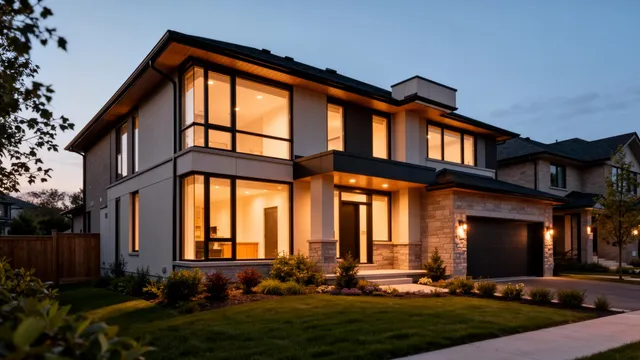
Ottawa's new-construction market is one of the deepest in Canada outside the GTA. Six production builders — Mattamy, Minto, Tamarack, Richcraft, Caivan, and Cardel — run active master-planned communities, with eQ Homes leading urban infill and condo work. Together they keep freehold and condo absorption steady even when resale inventory tightens up.
Here's what's actually happening in new construction right now: where the active communities are, how pricing and incentives are moving, what design-centre spend looks like, where lot premiums create value, and what to watch over the next 12–18 months. Follow the links below for builder-specific detail.
Prices, rates, and program rules change often. Treat the figures here as general guidance, not advice for your specific situation. Ask Bo for current OREB comparables, and confirm program eligibility with your lender or lawyer.
Who's building in Ottawa
Six volume builders anchor the market: Mattamy Homes (Half Moon Bay, Fairwinds), Minto Communities (Mahogany, Avalon, Arcadia), Tamarack Homes (Half Moon Bay, Cardinal Creek, Findlay Creek), Richcraft Homes (Riverside South, Stittsville, Kanata, Barrhaven), Caivan Communities (Barrhaven, Stittsville, Kanata, Findlay Creek), and Cardel Homes (Blackstone Kanata, Creekside Barrhaven, Kemp Woods Stittsville).
eQ Homes (Greystone Village, Provence, Wateridge Village, Glebe condos) and a handful of smaller mid-tier and infill builders round out the market. Together they support roughly 3,000–5,000 new-construction transactions a year, depending on the rate cycle.
Where the active communities are
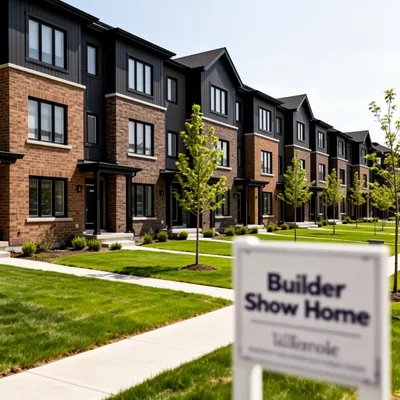
Barrhaven: Half Moon Bay (Mattamy, Tamarack), Creekside (Cardel), plus Caivan and Richcraft phases. Stittsville: Fairwinds (Mattamy), Kemp Woods (Cardel), Westwood (Richcraft), Caivan phases. Kanata: Arcadia (Minto), Blackstone (Cardel), Richcraft and Caivan phases in Kanata North and West. Orléans: Avalon (Minto), Cardinal Creek Village (Tamarack), Provence (eQ).
Manotick: Mahogany (Minto). Riverside South: Richcraft and Tamarack phases. Findlay Creek: Tamarack and Caivan phases. Plus Greystone Village, Wateridge Village, and select Glebe condo projects from eQ. Each community typically releases in phases of 50–150 units, priced against how quickly the current phase is absorbing.
Freehold pricing, entry to executive
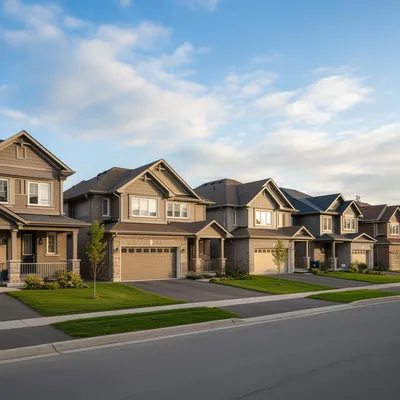
Entry-level rear-lane townhomes currently start in the low $500,000s (Caivan, Mattamy, Minto). Standard front-loaded townhomes run $600,000–$750,000. Semi-detached: $650,000–$800,000. 30-foot singles: $750,000–$900,000. 36-foot: $850,000–$1.0M. 43-foot: $950,000–$1.2M. 50-foot executive singles: $1.1M–$1.6M+, depending on community, lot premium, and base inclusions.
Lot premiums add $20,000–$100,000+ on top of base price for corner, ravine, premium-pie, or end-unit lots. Design-centre spend typically adds another $30,000–$100,000+, depending on the builder, the model, and how far from base spec you go.

New-construction condo pricing
Pre-construction condo product currently launches at $700–$950 per square foot downtown (Centretown, ByWard Market, LeBreton Flats), $650–$850 per square foot in inner-suburb locations (Westboro, Hintonburg, the Glebe), and $550–$750 per square foot in suburban locations.
Deposits typically run 15–20% spread across 24–36 months of construction. Occupancy fees kick in between interim occupancy and final closing — usually $1,500–$3,000/month for a one- or two-bedroom unit. Budget for that period as part of your total cost.
Where the negotiating room is
Incentive packages move with how fast a phase is selling. On hot phases in flagship communities (early Mahogany, early Blackstone, hot Half Moon Bay releases), incentives are thin. In slower phases or end-of-phase clean-up, packages routinely include $5,000–$25,000 in design-centre credits, specific free upgrades (hardwood extension, basement bath rough-in, smooth ceilings), lot-premium reductions, and more flexible deposit timing.
Caivan and Mattamy tend to be the most aggressive on incentives at entry-level price points. Cardel and Minto generally hold pricing with modest credits. eQ holds pricing with little flexibility. Across all builders, the best timing to negotiate is typically late in a phase, and around quarter- or year-end.
Design-centre upgrades — where the money goes
The design centre is where builders make a real chunk of project margin. Kitchen-cabinet upgrades typically carry 50–80% margin, premium tile and flooring 40–70%, builder-supplied window coverings 50–90%, and appliance packages 20–50% (often cheaper sourced after closing).
The upgrades that actually earn back on resale: structural changes made at the framing stage (kitchen widening, basement bedroom rough-in, primary suite adjustments), basement plumbing rough-ins for future bathrooms, dedicated 240V EV charging, and 9-foot main-floor ceilings where they aren't already standard.
Closing costs on new construction
New-construction closing costs work differently than resale. Main line items: HST on the purchase price (usually embedded in the base price for freehold, with the new-home rebate already applied; condo treatment varies), development charges and education levies passed through by the builder ($5,000–$25,000+ depending on the municipality and community), Tarion enrollment fees, utility hookups, and standard Ontario land transfer tax with a first-time-buyer rebate where it applies.
Budget 2–4% of purchase price for closing costs on a new freehold purchase, plus the occupancy-fee period if you're buying a condo. See the closing-costs guide for a full walkthrough.
Pre-construction or resale — how to decide
Pre-construction freehold gives you today's pricing locked in for delivery 9–14 months out, a fresh Tarion warranty, some design-centre customization, no competing buyers, and a predictable closing timeline.
Resale freehold gives you a property you can actually inspect, immediate occupancy, an established neighbourhood with mature schools and amenities, no design-centre spend, and usually more square footage per dollar. Resale is generally the safer choice for first-time buyers; pre-construction can be worth it when you want a specific community or floor plan that resale doesn't offer.
Where the new-construction market is headed
Builder release cadence is easing off peak levels. Mattamy, Minto, Caivan, Richcraft, and Cardel are still releasing phases on a roughly normal schedule; pricing is broadly stable to modestly rising in flagship communities, and stable to modestly discounted in slower-absorbing ones.
Expect incentives to stay meaningful on entry-level and mid-tier product through any rate-driven slowdown. Flagship executive product (Blackstone, Mahogany, Arcadia executives) is likely to hold pricing with little incentive room. Condo absorption is rate-sensitive, so expect more builder flexibility there through a cooling period.
How to actually buy new construction well
There are more leverage points in this process than most buyers realize: builder, community, phase timing, lot, model, structural options, design-centre choices, deposit structure, and how you handle the PDI and post-close warranty period.
Bring your own representation. The builder pays your agent's commission, not you — and an agent who works new construction regularly will negotiate credits, structural pricing, and lot-premium adjustments that more than cover their role. The sales-centre rep represents the builder; you should have someone on your side too.
Questions People Ask
A few common questions
- Who are the major new construction builders in Ottawa?
- Six volume builders anchor the market: Mattamy Homes, Minto Communities, Tamarack Homes, Richcraft Homes, Caivan Communities, and Cardel Homes. eQ Homes anchors urban infill and condo product. Each operates across multiple Ottawa submarkets and releases in phases throughout the year.
- What is the average price of a new construction home in Ottawa?
- It depends heavily on community, builder, model, and lot. Entry-level rear-lane townhomes start in the low $500,000s. Standard front-loaded townhomes run $600,000–$750,000. 30-foot singles $750,000–$900,000. 36-foot $850,000–$1.0M. 43-foot $950,000–$1.2M. 50-foot executive singles $1.1M–$1.6M+. Lot premiums and design-centre upgrades come on top.
- How much do design centre upgrades cost on an Ottawa new construction home?
- Typically $30,000–$100,000+, depending on the builder, model, and how far you go from base spec. Margins on most upgrades run 40–80%, so plenty of cosmetic items are cheaper sourced after closing. The upgrades that actually pay off are structural framing changes, basement plumbing rough-ins, and dedicated EV electrical capacity.
- Are there incentives on new construction in Ottawa right now?
- Yes, and they vary by builder and how fast a release is selling. Caivan and Mattamy tend to be most aggressive on entry-level pricing and incentives; Cardel, Minto, and eQ hold pricing with more modest flexibility. Best timing is typically late in a phase, or around quarter- and year-end. With representation, $5,000–$25,000 in upgrade credits, specific free upgrades, and lot-premium adjustments are routinely available.
- Should I buy pre-construction or resale in Ottawa?
- Pre-construction suits buyers who want a specific community, model, or lot that resale doesn't offer, and who can handle possible closing delays and design-centre spend. Resale is usually the lower-risk pick for first-time buyers — known condition, immediate occupancy, no design-centre exposure, and typically more square footage per dollar.
- Do I need a buyer's agent to buy new construction in Ottawa?
- You don't need one, but it helps a lot to have one. The builder pays your agent's commission, not you. An agent who works new construction regularly will negotiate upgrade credits, structural pricing, lot-premium adjustments, and PDI walkthroughs that materially improve your outcome. The sales-centre rep represents the builder.
Keep Reading
Ottawa New Construction Hub
Master directory of every active community and builder.
Read moreAll Ottawa Home Builders
Side-by-side directory of every major Ottawa builder.
Read moreOttawa Builders Comparison Guide
Builder-vs-builder decision framework.
Read moreBuilder Upgrades Guide
Which design-centre upgrades earn back, and which to skip.
Read moreNew Construction Closing Costs
HST, levies, and the closing-day surprises.
Read moreFull Ottawa Market Report
Resale market context across all property types.
Read moreStraight From the Source
Check the numbers yourself
These are the official sources I use for current Ottawa real estate data, government programs and buyer protection.
Touring an Ottawa new-construction community?
I'll pull current releases across every major builder, compare incentive packages, and represent you through design centre and PDI — no cost.
Any prices, rates, market figures or value estimates on this page are for general information only, based on the assumptions shown, and are not legal, tax, mortgage or financial advice or an offer of credit. Actual rates, payments, taxes, fees and values vary — confirm the numbers with your lender, lawyer or accountant before relying on them. Full disclosures.
Ottawa in focus
What the city actually looks like