Ottawa Market Reports
Ottawa Real Estate Market Report
By Bo Yu, Broker, Right at Home Realty, Brokerage
Ottawa's market is one of the steadier ones in Canada. That's not an accident — 130,000+ federal public-service jobs, a 20,000-person Kanata North tech sector, two major universities, and consistent population growth from immigration all put a floor under demand. It's a big part of why Ottawa rarely sees the sharp swings you get in Toronto, Vancouver, or Calgary.
Below is what the market is actually doing right now, across the main property types and submarkets: pricing, how fast homes are moving, where inventory is tight or loose, and where the next 12–18 months are headed. Everything here comes from Ottawa Real Estate Board (OREB) statistics and reflects typical ranges, not exact figures — for numbers specific to a street or building, reach out directly.
Prices, rates, and program rules change often. Treat the figures here as general guidance, not advice for your specific situation. Ask Bo for current OREB comparables, and confirm program eligibility with your lender or lawyer.
What homes are actually selling for
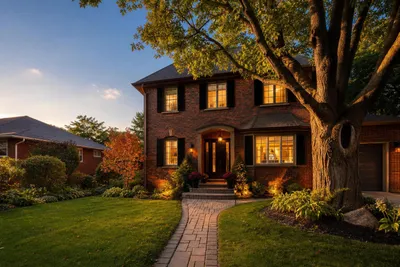
OREB's average residential-class sale price sits in the high $600,000s to low $700,000s, though that number hides a lot of variation. Detached homes run highest — typically high $700,000s to mid $800,000s — with places like Rockcliffe Park, Kanata Lakes, and Manotick's estate lots well above $1.5M, and pockets like Bells Corners, Greenboro, and parts of Vanier still under $600,000.
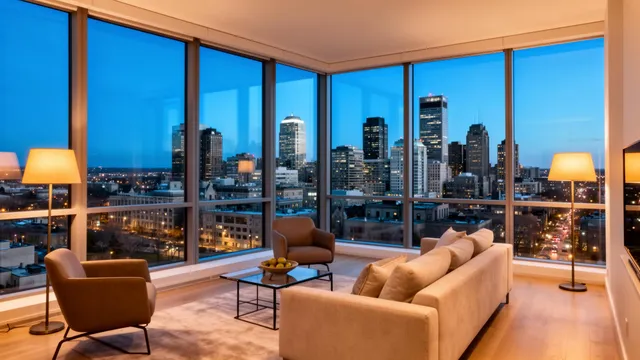
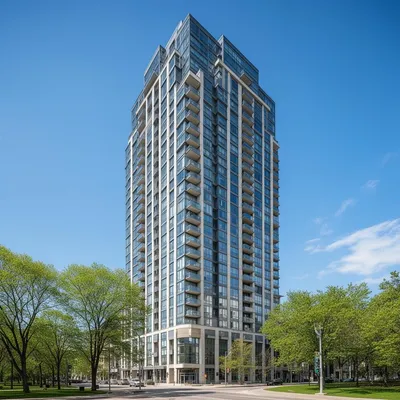
Townhomes generally land in the high $400,000s to mid $600,000s, with newer suburban builds (Kanata, Stittsville, Barrhaven, Riverside South) at the top of that range. Condos span the widest gap of all — entry-level inner-suburb units start in the low $300,000s, while flagship downtown buildings can clear $1M.
How fast, and how much, is moving
Ottawa usually sees 14,000–18,000 residential sales a year through OREB's MLS. That number moves with interest rates — Bank of Canada hikes tend to pull demand forward and slow things down; cuts do the opposite, fairly predictably.
Days-on-market tells you the temperature. In a balanced market, detached homes typically sell in 18–35 days. When it's a seller's market, well-priced listings go in under 10 days with multiple offers. When buyers have the upper hand, that stretches past 60 days and price cuts get common.
Reading the inventory numbers
Months of supply — active listings divided by monthly sales — is the standard yardstick: under 4 months favours sellers, 4–6 is balanced, above 6 favours buyers. Ottawa has spent most of the last decade in seller's-market or balanced territory, with short dips into buyer's-market conditions during rate shocks.
Right now the tightest inventory is in family-friendly suburban detached ($800K–$1.2M in Kanata Lakes, Bridlewood, Half Moon Bay, Avalon, Findlay Creek) and well-located inner-city semis and townhomes ($700K–$1M in Westboro, Hintonburg, the Glebe, Old Ottawa South). It's loosest in condos above $1M and older, dated inner-suburb condo stock.
Why rates matter so much here
Ottawa's buyer base leans heavily on salaried federal employees who qualify against fixed income, which makes the market unusually rate-sensitive. The OSFI stress test — qualifying at contract rate plus 2%, or 5.25%, whichever is higher — directly caps what most local buyers can spend.
As a rough guide, each 1% move in mortgage rates shifts a typical Ottawa dual-income household's maximum purchase price by about $50,000–$70,000. And the market reacts quickly: when rates drop, days-on-market shrinks and competition for the best listings picks back up fast.
The west end
Kanata, Stittsville, and Barrhaven carry the west end. Detached pricing runs $750K–$1.1M for standard product and $1.2M–$1.6M for executive homes (Kanata Lakes, Morgan's Grant, Half Moon Bay). Townhomes typically land $550K–$750K depending on age and lot size.
This end of the city benefits from ongoing tech-sector hiring, Stage 3 LRT planning, and a deep new-construction pipeline (Mattamy, Minto, Caivan, Cardel, Richcraft, Tamarack all building). Family-detached inventory in particular stays tight.
The east end
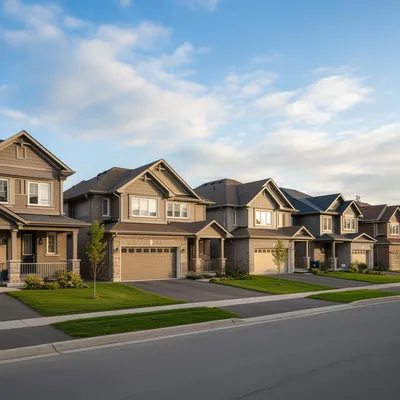
Orléans and Cumberland anchor the east. Standard detached pricing runs $700K–$950K, with executive product (parts of Avalon Encore, Fallingbrook, Cardinal Creek) at $1.0M–$1.4M. Townhomes typically go for $500K–$700K.
The east end benefits from Stage 2 LRT reaching Trim Road, steady bilingual federal employment, and generally lower entry pricing than the west end — it's historically run 5–10% behind west-end pricing on comparable product.
The centre and inner city
The Glebe, Westboro, Hintonburg, Old Ottawa South, Old Ottawa East, Centretown, and Sandy Hill make up central Ottawa, and pricing varies a lot within it — heritage Glebe and Westboro singles typically run $1.2M–$2.5M+, Hintonburg semis $900K–$1.4M, Old Ottawa South singles $1.0M–$1.8M.
The draw here is walkability, transit access, and mature streets — inventory stays structurally tight since there's little open land left, and most new supply comes from infill rather than new subdivisions.
Rural and the south end
Manotick, Greely, Russell, Riverside South, and the rural villages cover the south. Riverside South detached typically runs $750K–$1.1M; Manotick village singles $900K–$1.6M; rural estates in Manotick and Greely $1.5M–$3M+; Russell village detached $600K–$900K.
The appeal is bigger lots, lower property tax outside the urban core (Russell falls under the United Counties), and strong value per square foot on executive homes — offset by longer commutes and, in some cases, septic and well systems to manage.
What's actually driving long-term value here
Ottawa's fundamentals are hard to argue with: 130,000+ federal jobs anchoring demand through every cycle, a Kanata North tech park still growing (20,000+ employees, 540+ companies), 10,000+ new permanent residents landing each year, and over 100,000 students across Ottawa, Carleton, and Algonquin.
Stage 2 LRT has already opened new corridors to rapid transit — Trim Road east, Algonquin College and Moodie west, Riverside South south — and Stage 3 planning reaches into Kanata and Stittsville. Zoning reform is also quietly enabling secondary units and gentle density across the inner suburbs.
Where things are headed
No one can forecast a housing market with precision, but the direction of the underlying drivers is fairly clear. Federal employment is stable and slowly growing, immigration keeps adding demand, Kanata North tech employment is steady, and LRT-connected submarkets keep absorbing buyers.
On the supply side, new-construction starts have eased off peak levels — Mattamy, Minto, Caivan, Richcraft, and Cardel are all still releasing product, just at a somewhat slower pace. A flood of new inventory in any one segment looks unlikely over the next 12–18 months.
Rates remain the biggest near-term wildcard. If the Bank of Canada keeps moving toward neutral, mortgage qualification improves and absorption picks up. If rates climb instead, the market cools, but Ottawa's structural demand tends to limit how far it falls compared to more cyclical cities.
Questions People Ask
A few common questions
- What is the average home price in Ottawa right now?
- Per recent OREB data, the residential-class average sale price sits in the high $600,000s to low $700,000s. Detached homes typically average in the high $700,000s to mid $800,000s, townhomes in the high $400,000s to mid $600,000s, and condos start in the low $300,000s. For live comparables on a specific neighbourhood or building, get in touch.
- Is now a good time to buy in Ottawa?
- That depends on your finances, your plans, and the specific submarket and product you're looking at. Ottawa's fundamentals — federal employment, tech sector, immigration — give it a solid long-term demand floor regardless of short-term rate swings. The right time to buy is when you've got stable income, enough down payment, and a housing plan for 5+ years — not when you've correctly guessed the rate cycle.
- Are Ottawa home prices going up or down?
- Pricing has been directionally stable to modestly rising over the past decade, with brief cooling stretches during rate shocks. Performance varies by area — west-end and central submarkets have generally outperformed, while rural and luxury condo product has lagged. Rates will drive the next 12–18 months; steady federal-employment demand remains the longer-term anchor.
- Which Ottawa neighbourhoods offer the best value?
- It depends what you're optimizing for. For a tech commute: Kanata Lakes, Morgan's Grant, Bridlewood. For schools and family life: Half Moon Bay, Avalon, Findlay Creek. For walkability and transit: Westboro, Hintonburg, Old Ottawa South. For executive-sized lots at a lower price: Russell, Greely, rural Manotick. For inner-city luxury: Rockcliffe Park, the Glebe, the Manor Park heritage pocket.
- How long do homes take to sell in Ottawa?
- In a balanced market, well-priced detached homes typically sell in 18–35 days. In a seller's market, that can drop under 10 days with multiple offers. In a buyer's market, it can stretch past 60 days with price reductions becoming common. The exact number depends on the month, the submarket, and how the listing is priced against its comparables.
- What drives Ottawa real estate prices over the long term?
- Four things, mainly: 130,000+ federal jobs, the 20,000-person Kanata North tech sector, 10,000+ new permanent residents a year, and 100,000+ post-secondary students. Add LRT expansion, zoning reform that's opening up secondary units, and steady activity from major builders, and you get the demand floor that keeps Ottawa one of Canada's least cyclical markets.
Keep Reading
Ottawa Condo Market Report
Condo-specific pricing, inventory, and forecast.
Read moreOttawa New Construction Market Report
New-build pricing, absorption, and incentive trends.
Read moreOttawa Neighbourhoods Hub
Submarket-level guides to every major Ottawa community.
Read moreFree Ottawa Home Value Estimate
Get a broker opinion on your home's current market value.
Read moreOttawa Home Selling Guide
Pricing strategy and offer night in a shifting market.
Read moreStraight From the Source
Check the numbers yourself
These are the official sources I use for current Ottawa real estate data, government programs and buyer protection.
Want a market report built around your own property or neighbourhood?
I'll pull live OREB MLS comparables for the exact area or product type you're weighing — no cost, no obligation.
Any prices, rates, market figures or value estimates on this page are for general information only, based on the assumptions shown, and are not legal, tax, mortgage or financial advice or an offer of credit. Actual rates, payments, taxes, fees and values vary — confirm the numbers with your lender, lawyer or accountant before relying on them. Full disclosures.
Let's talk
Want a market read on your own street?
Send me your address or the neighbourhood you're watching and I'll put together a one-page read — comps, days-on-market, sale-to-list trend.
Ottawa in focus
What the city actually looks like