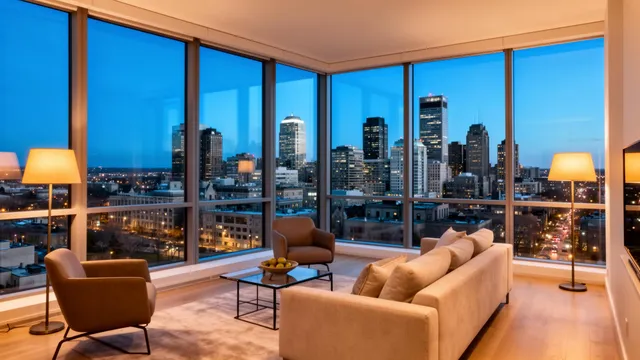
Ottawa Market Reports
Ottawa Condo Market Report
By Bo Yu, Broker, Right at Home Realty, Brokerage
Condos in Ottawa don't behave like the freehold market. Pricing is more sensitive to rates, more tied to investor demand and rental yields, and varies more from one building to the next than a detached home would within the same neighbourhood. A well-run, low-fee building can outperform its area; a high-fee building with problems can sit for months.
This report covers what's happening right now across Ottawa's main condo submarkets — Centretown, downtown/ByWard Market, Westboro and the Glebe, Sandy Hill and the university corridor, and the suburban condo pockets. The ranges below are typical OREB averages; for comparables on a specific building or unit, get in touch directly.
Prices, rates, and program rules change often. Treat the figures here as general guidance, not advice for your specific situation. Ask Bo for current OREB comparables, and confirm program eligibility with your lender or lawyer.
What condos are actually priced at
The range here is wide — entry-level dated suburban condos start in the low $300,000s, while luxury downtown and waterfront units in flagship buildings can top $1M. A typical downtown one-bedroom runs $400,000–$550,000; two-bedroom $550,000–$800,000; three-bedroom and corner-unit luxury $800,000–$1.5M+.
Inner-suburb condos — Hintonburg, Centretown West, Westboro, the Glebe — usually land $450,000–$750,000 for standard one- and two-bedroom units, with luxury corner units in the Glebe and Westboro sometimes clearing $1M.
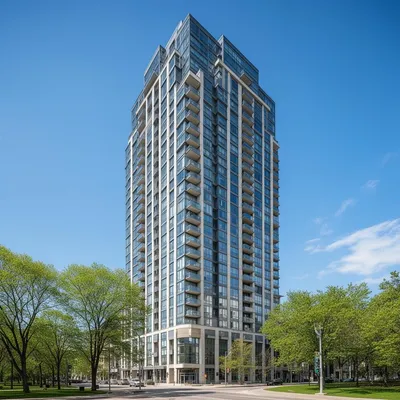
Fees, special assessments, and the reserve fund
Condo fees in Ottawa typically run $0.65–$0.85 per square foot per month for standard buildings, rising to $0.85–$1.20+ for luxury, full-amenity buildings (concierge, pool, fitness, party room). A 750 sq. ft. one-bedroom in a typical building carries roughly $500–$650/month in fees; a full-amenity luxury building can run $750–$900/month.
Reserve fund health matters more than almost anything else if you're holding for 5–10 years. A well-funded reserve absorbs big-ticket repairs — roof, elevators, building envelope — without a special assessment. A thin reserve means those costs get passed to owners, and special assessments hit resale value hard while they're active.
The status certificate — what actually matters
Every Ontario condo offer should include a status certificate review condition. It's the single most important document in the purchase, and it covers: reserve fund balance and study results, current or pending special assessments, fee history and any projected increases, rule changes, active legal actions, and unit-specific arrears.
The most common mistake is waiving that condition to win a bidding war, or having it reviewed by a lawyer who doesn't specialize in condo law. Use one who does — it costs $300–$500 and routinely catches issues that would cost far more later.
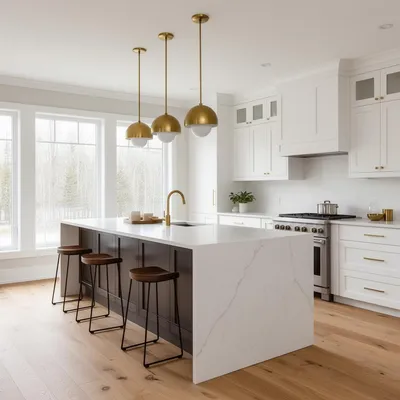
Downtown and Centretown
Downtown Ottawa — ByWard Market, Centretown, LeBreton Flats — is the biggest, most active condo submarket, with deep inventory and good pricing transparency. Standard one-bedroom runs $400,000–$550,000; two-bedroom $550,000–$800,000; three-bedroom and luxury corner units above $800,000.
Demand here comes from federal-employment walkability, restaurant and amenity density, and LRT access. The buildings that hold up best combine low- or mid-rise scale, solid reserve funds, a balanced owner-to-investor mix, and proximity to the LRT.
Westboro, the Glebe, and Hintonburg
These three anchor Ottawa's higher-end inner-city condo market. Pricing typically runs $500,000–$1M+ for one- and two-bedroom units, with flagship-building corner and full-floor units going well above that. Newer product from eQ, Surface, and select Domicile buildings here has held up well on resale.
Walkability, restaurants, transit, and schools drive demand. Inventory stays tight — infill condo product gets built slowly in these neighbourhoods, and steady interest from downsizers and well-paid professionals keeps pricing firm.
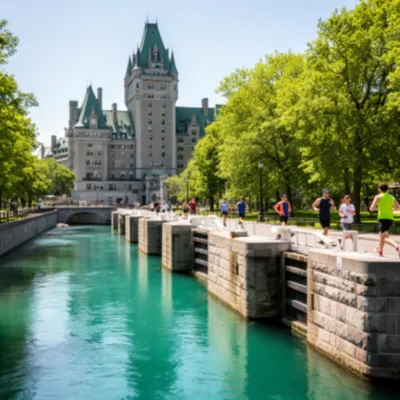
Sandy Hill and the university corridor
Sandy Hill and nearby uOttawa- and Carleton-adjacent condo product is heavily shaped by student rental and investor demand, with pricing typically $300,000–$550,000 for one- and two-bedroom units.
Cap rates and rental yields drive pricing here more than an owner-occupier's gut feel does — rent-to-price ratios, vacancy assumptions, and fee/tax projections matter most. This submarket is also more rate-sensitive than the rest of Ottawa's condo market.
Kanata, Barrhaven, and Orléans condos
Suburban condo product — Kanata Centrum, Barrhaven, Orléans town centres — typically runs $300,000–$500,000 for one- and two-bedroom apartment-style units, and $400,000–$600,000 for stacked townhome condos.
The draw is entry-level affordability, a lock-and-leave lifestyle for downsizers, and rental math for investors. Resale generally tracks the broader condo-market average but is sensitive to building-specific factors — reserve fund health, special assessments, fee trends, and building age.
Pre-construction versus resale
Pre-construction condos offer today's pricing locked in for delivery 24–36 months out, a fresh builder warranty, deposits spread across the construction period, and some ability to pick finishes at the design centre. The trade-offs: possible closing delays, occupancy fees during interim occupancy, market-timing risk while it's being built, and unit dimensions that can look different in person than on a floor plan.
Resale gives you known building economics — actual reserve-fund status, real fee history, real special-assessment history — plus immediate occupancy, the ability to walk the unit, and usually more square footage per dollar. For first-time condo buyers, resale is usually the safer bet; pre-construction can make more sense for repeat buyers or investors with a specific building or floor in mind.
The investor math
Typical Ottawa one-bedroom cap rates run 3.5%–5.0%; two-bedroom cap rates typically 4.0%–5.5%. Once you factor in vacancy, repairs, property management, and reserve contributions, actual cash-on-cash returns on a leveraged condo are quite sensitive to interest rates and fee increases.
The strongest-performing investor condos tend to be two-bedroom units in walk-to-LRT buildings with reasonable fees, in submarkets with a diverse tenant base — downtown, Centretown, Hintonburg, Westboro. The weakest are high-fee luxury buildings with soft rental demand, and aging suburban stock with rising fees.
Where the condo market is headed
Condo absorption is rate-sensitive and tied to where interest rates go next. Downtown and inner-city buildings keep drawing owner-occupiers — professionals and downsizers — while suburban and university-corridor buildings continue to draw investors weighing cap-rate math.
New supply is moderating; Ottawa isn't sitting on the kind of pre-construction glut you'd see in Toronto or Vancouver. Pricing in well-located, well-managed buildings looks unlikely to face much downward pressure over the next 12–18 months. Older suburban buildings with thin reserves remain the riskier segment.
Questions People Ask
A few common questions
- What is the average condo price in Ottawa?
- Pricing ranges from the low $300,000s for entry-level inner-suburb condos to above $1M for luxury downtown and Westboro-Glebe corner units. A typical downtown one-bedroom runs $400,000–$550,000; two-bedroom $550,000–$800,000; inner-city Westboro and Glebe condos $500,000–$1M+. For comparables on a specific building, get in touch.
- What are typical condo fees in Ottawa?
- Fees typically run $0.65–$0.85 per square foot per month for standard buildings, rising to $0.85–$1.20+ for luxury, full-amenity buildings (concierge, pool, fitness). A 750 sq. ft. one-bedroom in a typical building carries roughly $500–$650/month.
- Are Ottawa condos a good investment?
- Selectively, yes. Typical one-bedroom cap rates run 3.5%–5.0%; two-bedroom 4.0%–5.5%. The strongest investor condos tend to be two-bedroom units in walk-to-LRT buildings with reasonable fees. Steer clear of high-fee luxury buildings with weak rental demand and aging suburban stock with thin reserves.
- Should I buy pre-construction or resale condo in Ottawa?
- Resale is usually the lower-risk choice for first-time condo buyers — the building's economics are known, you can walk the unit, and you typically get more square footage per dollar. Pre-construction can pay off if you want a specific building and floor, can handle possible closing delays, and budget correctly for the occupancy-fee period.
- What is a status certificate?
- It's the single most important document in an Ontario condo purchase, disclosing reserve fund status, current or pending special assessments, fee history, rule changes, legal actions, and unit-specific arrears. Always add a status-review condition to your offer and have a condo-experienced lawyer review it.
- What are the best condo buildings in Ottawa?
- The strongest buildings tend to be low- or mid-rise, well-reserved, with a balanced owner-to-investor mix, walkable location, and easy LRT access. The specific top performers vary by submarket and price band — I can pull current comparables and reserve-fund status for any building you're considering.
Keep Reading
Ottawa Real Estate Market Report
Full-market context across detached, townhome, and condo.
Read moreOttawa New Construction Market Report
Pre-construction condo and freehold trends.
Read morePre-Construction Condos Ottawa
Pre-construction buyer playbook.
Read moreDowntown Ottawa Real Estate
Submarket guide for downtown condo buyers.
Read moreCentretown Real Estate
Submarket guide for Centretown condo buyers.
Read moreStraight From the Source
Check the numbers yourself
These are the official sources I use for current Ottawa real estate data, government programs and buyer protection.
Have a specific Ottawa condo building in mind?
I'll pull live resale comparables, status-certificate-level building intelligence, and fee history for any building you're considering — no cost.
Any prices, rates, market figures or value estimates on this page are for general information only, based on the assumptions shown, and are not legal, tax, mortgage or financial advice or an offer of credit. Actual rates, payments, taxes, fees and values vary — confirm the numbers with your lender, lawyer or accountant before relying on them. Full disclosures.
Ottawa in focus
What the city actually looks like