Ottawa Property Types
Ottawa Homes For Sale
By Bo Yu, Broker, Right at Home Realty, Brokerage
Ottawa is one of the most liquid major-city markets in Canada — federally anchored employment, steady migration, and four distinct quadrants (central, west, east, south) that give buyers more real choice than Toronto or Vancouver offer at similar price points.
This is the working playbook I use with Ottawa buyers: what's actually listed right now, how pricing reads by neighbourhood, where competition concentrates, and the offer mechanics that tend to win without overpaying.
Prices, rates, and program rules change often. Treat the figures here as general guidance, not advice for your specific situation. Ask Bo for current OREB comparables, and confirm program eligibility with your lender or lawyer.
The market at a glance
OREB reports roughly 14,000–17,000 residential MLS sales a year across the National Capital Region, with average sale prices generally in the high-$600s for the all-property composite, low-$700s for freehold, and high-$400s for condos.
Inventory follows a predictable rhythm: listings peak in May–June and again in September–October, thin out through July–August, and bottom out in December–February. Multiple offers cluster in family-suburb price bands ($650K–$900K freeholds in Barrhaven, Kanata, Orléans, Stittsville) and prestige central pockets (Glebe, Westboro, Old Ottawa South under $1.5M).
Days-on-market runs 25–40 in normal conditions and drops under 14 in the hottest pockets. Sale-to-list ratios sit near 100% city-wide and exceed 102% in the most competitive bands.
Pricing by property type
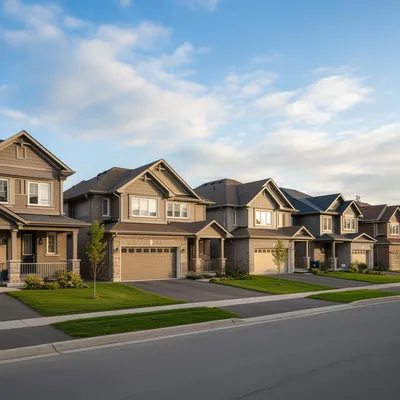
Detached homes are the biggest segment, at 60%+ of sales. Median pricing typically lands $700K–$900K, with $1.2M+ common in Kanata Lakes, Riverside South Phase 2 executives, Westboro infill, and the Glebe.
Townhomes — freehold and condo — are the strongest entry point for first-time buyers, generally $500K–$700K across Barrhaven, Orléans, Stittsville, and Kanata.
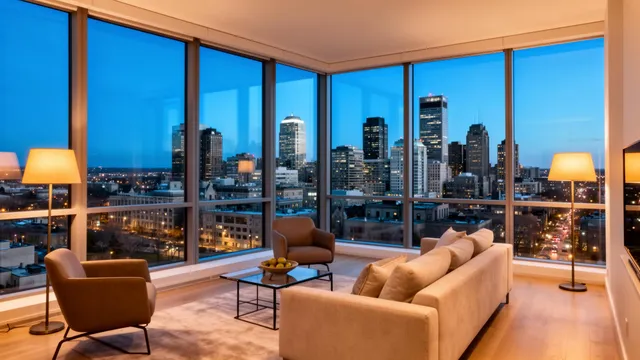
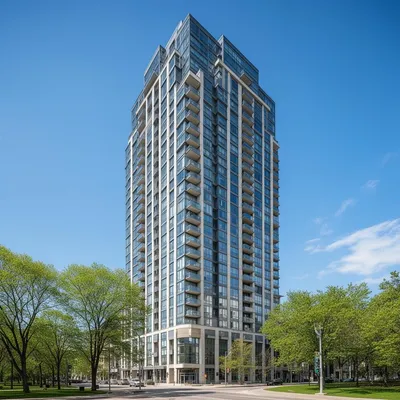
Condos span $300K–$500K for one-bedroom and standard two-bedroom units in Centretown, Hintonburg, Westboro, Little Italy, and Sandy Hill, with $600K+ common for newer luxury units along the canal and waterfront.
The neighbourhoods buyers ask about most
Family freehold demand concentrates in Barrhaven (Half Moon Bay, Stonebridge, Longfields), Kanata (Bridlewood, Morgan's Grant, Kanata Lakes), Orléans (Avalon, Chapel Hill, Cardinal Creek), and Stittsville (Jackson Trails, Wyldewood, Potter's Key).
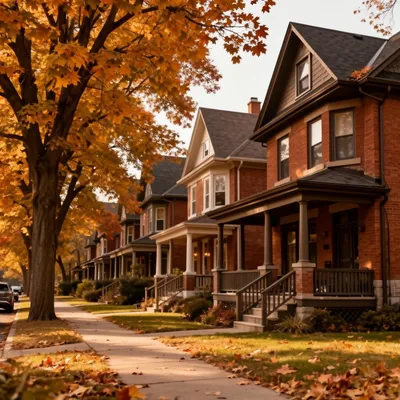
Walkable urban demand concentrates in the Glebe, Old Ottawa South, Hintonburg, Westboro, Centretown, Sandy Hill, and New Edinburgh.
Buyers chasing lot size and value tend to look further out — Manotick, Greely, Riverside South, Russell, and rural Nepean — for more square footage per dollar.
How to actually win here
A fully verified mortgage pre-approval — income, credit, and down payment confirmed — is table stakes; most listing agents won't take an offer seriously without one. Set a realistic ceiling that includes closing costs (1.5%–2% on top of price).
Tour a tight shortlist, not the whole market. Buyers who win consistently see 8–15 active homes, narrow to 2–4, and write strategically. Touring too many homes just produces overbidding fatigue.
Read the listing's history. A home that's sat 21 days and re-priced usually means a motivated seller, where conditions matter more than price. A home at day 3 with three showings booked probably means a bully or improved-offer night — price accordingly.
Match your conditions to the property. Financing, inspection, and (for condos) status certificate are the usual three. In a multiple-offer situation, a pre-inspection plus a financing-only condition is a routine way to stand out without giving up protection.
What buyers tend to overpay for
Staging-driven emotional bids: an empty house with identical fundamentals will sell for 3%–6% less than the same home staged well. Don't buy the lighting and the throw pillows.
Renovated kitchens in awkward floor plans: cosmetic renovations typically add back about 50% of their cost at resale. Layout and structure matter far more over time.
Showpiece backyards and pools: maintenance costs and Ottawa's short outdoor season cap the upside. Pools rarely pay for themselves at resale.
- Skip: cosmetic-only renovations that mask layout problems
- Skip: high-fee condos with imminent special-assessment risk
- Skip: backyard pools as a price-justification reason
- Lean in: south-facing yards, walk-up basements, double garages
- Lean in: 2-storey detached on 36'+ lots in established suburbs
What working with me actually looks like
In Ontario, the seller pays the buyer's-agent commission, so working with me costs you nothing at closing. You get a custom MLS feed tuned to your search, weekly comparable-sales context, an offer-strategy memo before every write, full inspection and condo-status coordination, and negotiation experience across hundreds of Ottawa deals.
I represent buyers only, never both sides of a deal, so your interests are the only ones I'm negotiating for.
Questions People Ask
A few common questions
- What is the average price of a home for sale in Ottawa?
- OREB's composite benchmark generally runs in the high-$600,000s. Freehold (detached + townhomes) averages near $750,000 and condos near $440,000–$480,000. Pricing varies sharply by neighbourhood — Rockcliffe Park and the Glebe sit well above average, while Russell, Greely, and parts of Nepean sit well below.
- Is now a good time to buy a home in Ottawa?
- Ottawa is structurally one of Canada's more stable housing markets, thanks to federally anchored employment, steady migration, and limited speculative pricing. The right time to buy is when your finances, timeline, and a specific property all line up — trying to time the market rarely beats simply buying the right home well.
- How many homes are typically for sale in Ottawa?
- Active OREB residential inventory ranges from around 1,800 listings in winter to 4,500+ at peak spring. Months-of-inventory readings near 2 favour sellers; 4+ months favour buyers.
- Do I need to pay my buyer's agent in Ottawa?
- No. In Ontario, the seller's listing brokerage typically pays the buyer's-agent commission as part of the listing agreement, so there's no out-of-pocket cost to the buyer in nearly all residential transactions.
- How long does it take to buy a home in Ottawa?
- From first tour to firm offer usually takes 6–12 weeks. Closing happens 30–90 days after the offer firms up. New construction runs 12–36 months from contract to occupancy.
- What is the lowest down payment to buy a home in Ottawa?
- 5% on the first $500,000 of price, 10% on the portion from $500,000 to $1.5M, and 20% above $1.5M. On a $600,000 Ottawa home that's roughly $35,000 minimum, plus 1.5%–2% in closing costs.
Keep Reading
Ottawa Condos For Sale
Condo market, walkability, and entry pricing.
Read moreOttawa Townhomes For Sale
Freehold and condo townhomes across every suburb.
Read moreOttawa Detached Homes For Sale
Single-family pricing, lots, and the suburbs that win.
Read moreOttawa Luxury Homes
Above-$1.5M Ottawa: enclaves, builders, and strategy.
Read moreOttawa Neighbourhood Guides
Schools, transit, parks, and pricing by community.
Read moreOttawa Market Report
Current Ottawa pricing, inventory, and sales trends.
Read moreStraight From the Source
Check the numbers yourself
These are the official sources I use for current Ottawa real estate data, government programs and buyer protection.
Ready to see Ottawa homes that actually fit?
I'll build a private MLS feed for your search and walk through the first shortlist together.
Any prices, rates, market figures or value estimates on this page are for general information only, based on the assumptions shown, and are not legal, tax, mortgage or financial advice or an offer of credit. Actual rates, payments, taxes, fees and values vary — confirm the numbers with your lender, lawyer or accountant before relying on them. Full disclosures.
Let's talk
Want to see Ottawa homes that actually match what you need?
Send a few details and I'll set up a private MLS feed tuned to your budget, neighbourhoods, and must-haves, updated in real time.
Ottawa in focus
What the city actually looks like