November 5, 2026
Best Ottawa Neighbourhoods: Top School Zones and Value
Evaluate how secondary school boundaries and academic rankings shape real estate resilience across the best Ottawa neighbourhoods. Read our analytical guide.
When assessing residential real estate across the National Capital Region, boundary lines drawn by school boards often exert as much influence on asset performance as zoning bylaws or municipal transit master plans. For buyers seeking capital preservation alongside lifestyle utility, identifying the best ottawa neighbourhoods requires a granular understanding of how designated public and Catholic school catchments insulate home values during market contractions and accelerate liquidity during expansion phases.
School boundaries in Ottawa are not arbitrary administrative details; they dictate buyer pooling, transaction velocity, and the enduring floor price per square foot across distinct micro-markets.
The Mechanics of School Catchment Premiums in Ottawa
In markets characterized by volatile interest rate environments, properties located within high-demand designated school zones consistently exhibit truncated Days on Market (DOM) and compressed negotiation margins. In Ottawa, two primary boards govern English-language education: the Ottawa-Carleton District School Board (OCDSB) and the Ottawa-Catholic School Board (OCSB). Both boards have systematically tightened their policies regarding out-of-boundary transfers.
Historically, buyers could acquire a property in an adjacent, lower-cost enclave and petition for a student transfer based on specialized programming or childcare logistics. Today, high-capacity utilization across top-ranked facilities—such as Earl of March Secondary School in Kanata or Nepean High School in Westboro—means out-of-boundary approvals are virtually non-existent. Consequently, admission requires a registered residential address within the legal catchment before the academic year begins.
This structural inflexibility creates hyper-localized pricing premiums. A two-storey detached home sited on the correct side of a catchment border frequently commands a 6% to 11% valuation premium over a comparable structure situated just three streets over outside the boundary.

Evaluating the Best Ottawa Neighbourhoods by Academic Performance and Housing Stock
Navigating these localized premiums requires evaluating the intersection of municipal zoning, builder floor plans, and long-term academic reputation. When reviewing our comprehensive directory of Ottawa neighbourhood profiles and housing analyses, discerning buyers observe clear patterns in how educational infrastructure stabilizes asset pricing.
1. Westboro and Highland Park (Nepean High School Catchment)
Westboro and Highland Park represent an established tier of urban infill development anchored by Nepean High School and Broadview Public School. The educational corridor along Broadview Avenue features an expansive modern physical plant, completed in 2016, which eliminated the portables that previously depressed buyer confidence.
Housing stock here consists primarily of post-war custom infill construction—executed by builders such as Modernist Homes and Roca Homes—alongside legacy 1940s detached bungalows on 50-foot frontages. The demand profile is driven heavily by professionals from the Tunney’s Pasture employment node and the private legal and financial sectors downtown.
Even as infill inventory expanded along Dovercourt and Tweedsmuir Avenues, detached homes tied directly to Broadview and Nepean High School have demonstrated negligible inventory overhang. Properties here operate on strong underlying land values, where lot acquisition costs alone consistently trade between $750,000 and $950,000 prior to demolition.
2. Kanata Lakes and Marchwood (Earl of March Catchment)
In the west end, Kanata Lakes remains the benchmark for suburban equity retention. Built out principally by Urbandale Construction and Tartan Homes through the 1980s, 1990s, and 2000s, the neighbourhood's master-planned layout wraps around the Kanata Golf and Country Club. However, its primary financial defensive moat is its assignment to Earl of March Secondary School and Stephen Leacock Public School.
Earl of March regularly ranks among the highest-performing non-specialized public high schools in Eastern Ontario according to the Fraser Institute metrics, driven by its Advanced Placement (AP) programming and close ties to the Kanata North Technology Park. Key residential arteries such as Keyrock Drive, Knudson Drive, and Walden Drive command swift absorption rates even during winter transaction slowdowns.
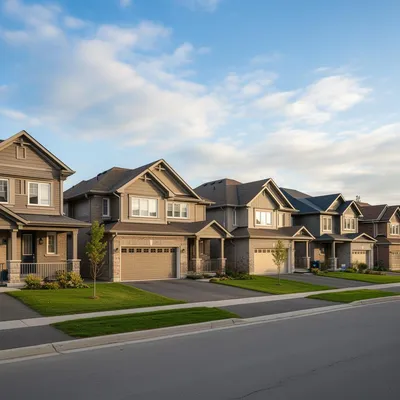
Buyers here prioritize brick-fronted, centre-hall executive floor plans offering four bedrooms on the second level—a layout that aligns directly with the target demographic of tech executives, defence contractor personnel, and specialized engineers requiring long-term academic stability for secondary-school-aged children.
3. Old Ottawa South and The Glebe (Lisgar Collegiate Catchment)
For central urban character, Old Ottawa South and the Glebe offer century architecture within reach of Lisgar Collegiate Institute, located just north on Lisgar Street. Lisgar's Gifted program and historical academic prestige create persistent demand across the urban core.
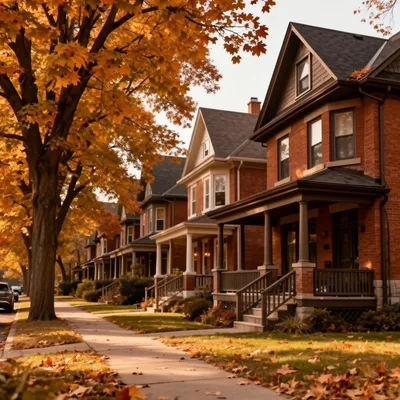
The housing stock here features double-brick Edwardian and Victorian residences along streets like Powell Avenue, Clemow Avenue, and Sunnyside Avenue. While maintenance capital expenditures for these properties are structurally higher due to stone foundations and aging building envelopes, the scarcity of single-family inventory coupled with top-tier school access maintains strong floor pricing. Properties feeding into First Avenue Public School (for French Immersion) and Hopewell Avenue Public School routinely clear the market via pre-emptive offers during balanced macro environments.

Core Variables Influencing School Zone Real Estate
When underwriting an acquisition based on educational catchments, buyers must scrutinize variables beyond the current Fraser Institute score. Academic reputations evolve, but the physical constraints of municipal boundaries and institutional planning dictate long-term liquidity:
- Pupil Accommodation Reviews (PAR): The OCDSB and OCSB periodically initiate boundary realignments to manage facility over-capacity. Suburban fringe developments face elevated risk of catchment adjustments compared to mature urban cores.
- French Immersion Pathways: In Ottawa, the choice between Early French Immersion (EFI) and the English program frequently splits siblings across different facilities if not planned accurately. Communities offering dual-track elementary institutions—such as Elmdale Public School or Jack Donohue Public School—command broader buyer pools on resale.
- Walking Zone Thresholds: Ottawa Student Transportation Authority (OSTA) policies dictate yellow-bus eligibility based on strict distance radiuses (typically 1.6 km for elementary, 3.2 km for secondary). Properties situated within safe, pedestrian-oriented walking corridors bypass bus driver shortages and retain higher desirability for working households.
- Specialized Secondary Accreditations: High schools offering International Baccalaureate (IB) diplomas (e.g., Colonel By Secondary School in Beacon Hill) or Specialized High Skills Majors (SHSM) draw regional interest, insulating micro-pockets from broader municipal pricing pullbacks.

4-Step Due Diligence Framework for Catchment-Driven Buyers
To ensure your acquisition capital is protected against administrative boundary shifts, execute the following systematic process before submitting an Agreement of Purchase and Sale:
- Direct Database Verification: Cross-reference the property’s legal roll number directly against the OSTA School Locator database. Never rely on listing data, marketing brochures, or historical mapping, as boundary lines can intersect individual streets unevenly.
- Municipal Infill and Capacity Audits: Review the school board’s annual Capital Priority lists. Schools operating over 120% capacity with extensive temporary portables are prime candidates for upcoming catchment redistributions or mandatory busing to holding schools.
- Lot Orientation and Layout Feasibility: Focus acquisitions on floor plans that match the long-term graduation cycle. Four-bedroom floor plans with functional basements cater directly to families remaining in situ through a child's 14-year primary-to-secondary cycle, minimizing turnover costs.
- Resale Liquidity Buffer Analysis: Calculate the historical price spread between properties within the target boundary and comparable inventory situated in adjacent, secondary catchments. Ensure the current spread reflects historical averages rather than an unsustainable speculative spike.
Quantitative Trends: Price Compression vs. Resale Velocity
Empirical observation of the Ottawa Real Estate Board MLS transaction data shows that during market downturns, top school zones rarely see dramatic nominal price drops compared to the broader municipal average. Instead, their price stability manifests as a velocity advantage.
Where peripheral suburban inventory may accumulate 45 to 60 Days on Market, properties in prime zones like Westboro, Kanata Lakes, and Alta Vista (specifically the Lycée Claudel or Canterbury corridors) routinely transact in under 21 days. This liquidity premium provides sellers with an exit strategy that remains functional across all phases of the credit cycle.
Frequently Asked Questions
Can school boards change boundaries after I purchase a home? Yes. Both the OCDSB and OCSB regularly review demographic yields and facility utilization. When dynamic growth outpaces permanent infrastructure, school boards execute boundary adjustments. Mature central neighbourhoods with stable demographics face significantly less boundary volatility than newly expanding master-planned suburban developments.
Does attending a French Catholic school require Catholic baptism in Ottawa? For elementary schools under the Ottawa Catholic School Board (OCSB) or French-language Catholic boards (CECCE), proof of baptism (student or parent) is generally mandatory. At the secondary level, Catholic high schools in Ontario are open-access, allowing non-Catholic students to enroll regardless of faith, subject to local capacity limits.
Is the premium paid for a top school zone recovered upon resale? Historically, yes. Because top-tier educational institutions in established Ottawa communities possess multi-decade reputations, the premium paid upon entry is typically recaptured upon exit. It functions as an equity preservation mechanism, provided the property is maintained to current market expectations.
If you are evaluating the best ottawa neighbourhoods to match your family's timeline and long-term investment strategy, connect with our team today to review hyper-local transaction data and boundary-specific valuation trends.
Straight From the Source
Check the numbers yourself
These are the official sources I use for current Ottawa real estate data, government programs and buyer protection.
Featured homes
Current listings in Kanata
On the market
Homes for sale in Kanata
Condos, townhomes, semis, and detached homes from the Ottawa MLS board, refreshed daily. Commercial, land, and rental listings aren't included here.
Listing information is supplied by third-party brokerage and listing data sources. Status, price and details can change without notice, are believed reliable but are not guaranteed, and must be independently verified. Shown for personal, non-commercial use. Not intended to solicit properties already listed with another brokerage. Full disclosures.