November 5, 2026
Best Ottawa Neighbourhoods for Long-Term Land Value
Evaluate the best Ottawa neighbourhoods for capital preservation and long-term land value using zoning, lot depth, and historical liquidity metrics.
When evaluating real estate for significant capital allocation, cosmetic upgrades and developer finishes often distract from the single most critical driver of generational wealth: the underlying land. In a shifting macroeconomic climate with fluctuating interest rates and evolving municipal policies, identifying the best Ottawa neighbourhoods requires stripping away the structure to assess land value ratios, lot dimensions, zoning flexibilities, and historic absorption rates.
Ottawa is unique. As a G7 capital with institutional employment anchors, strict greenbelt boundaries, and an evolving Official Plan, certain mature micro-pockets exhibit structural insulation against macro downturns. These areas do not simply appreciate during bull runs; they preserve liquidity and retain capital when broader markets stall. For a comprehensive look at how individual districts perform across the city, explore our Ottawa neighbourhood guides and market profiles.
Here is a data-driven framework for analyzing land value and long-term capital preservation across the city's most defensible enclaves.
Measuring What Makes the Best Ottawa Neighbourhoods Resilient
In standard residential underwriting, value is divided into two components: the replacement cost of the physical improvements (the building) and the residual land value. Over a 30-year horizon, structures depreciate while prime urban land appreciates.
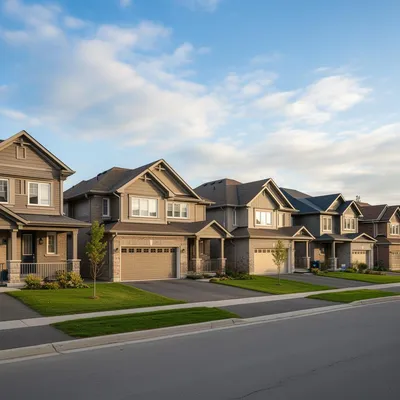
In suburban greenfield developments, the physical structure frequently accounts for 65% to 80% of the aggregate purchase price. If market sentiment softens, that asset carries significant depreciation risk. Conversely, in Ottawa's premier mature pockets, the land often represents 55% to 70% of the total transaction value. The dirt itself carries the valuation floor.
Three structural pillars dictate whether an enclave qualifies among the best Ottawa neighbourhoods for land security:
- Scarcity and Infill Boundaries: Physical geography, the National Capital Commission (NCC) Greenbelt, and historical conservation corridors restrict outward expansion, forcing capital back inward into established streetscapes.
- Lot Frontage and Shape Regularity: Narrow frontages limit redevelopment yield. Pockets with minimum 50-to-66-foot lot frontages grant substantial flexibility for custom single-family rebuilds, high-end additions, or long-term accessory dwelling configurations.
- The Mature Neighbourhoods Overlay (MNO): Under Ottawa's Zoning By-law, mature areas face streetscape character analysis before redevelopment. While this adds development complexity, it effectively protects existing property owners from erratic, low-grade architectural disruption, preserving street-level capital value.

McKellar Park and Westboro South: Prime West-End Scarcity
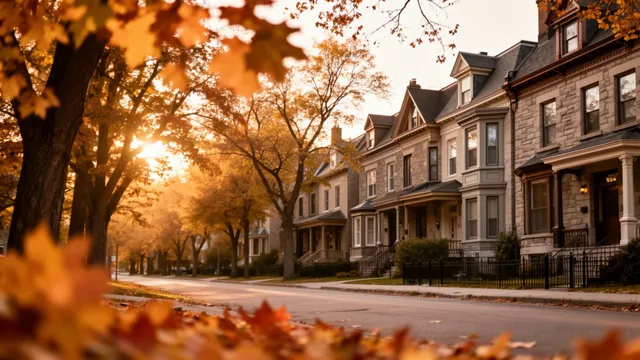
McKellar Park and the residential streets immediately south of Richmond Road in Westboro represent the gold standard for west-end land value. Pockets along Kenwood Avenue, Keenan Avenue, and Wavell Avenue offer a distinct structural advantage over the narrow, 25-foot infill lots found closer to the commercial core of Westboro Village.
Here, lot dimensions typically run 50 to 60 feet in width by 100 to 120 feet in depth. This spatial footprint allows for substantial custom builds without sacrificing rear yard privacy or requiring punitive variance applications at the Committee of Adjustment. Proximity to the Kichi Sibi winter trail, the Ottawa River corridor, and elite public schooling catchments like Broadview Public School and Nepean High School creates consistent buyer demand among high-earning medical, legal, and tech executives.
Even when broader regional transaction volumes decline, listings on non-arterial streets in McKellar Park routinely post days-on-market (DOM) metrics 20% to 35% lower than the municipal average. The land-to-structure ratio here consistently hovers above 60%, providing an exceptionally defensive asset profile.
The Civic Hospital Precinct: Institutional Stability
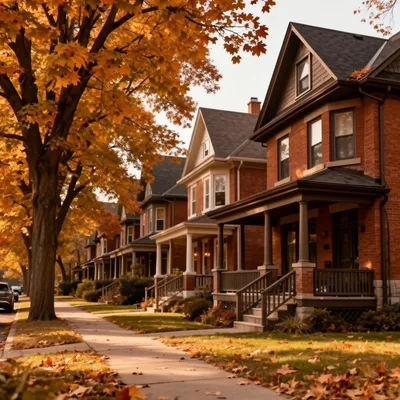
Bounded by Carling Avenue, Island Park Drive, and the historic Central Experimental Farm, the Civic Hospital neighborhood is one of Ottawa’s most liquid micro-markets. The architectural fabric is dominated by early-to-mid-20th-century character homes situated on deep, mature lots along streets like Sherwood Drive, Ruskin Street, and Faraday Street.
What cements this district's long-term land value is its permanent institutional adjacency. The ongoing $2.8-billion development of the new Ottawa Hospital Civic Campus at the former Sir John Carling site ensures an influx of specialized healthcare professionals, institutional researchers, and clinical leadership seeking proximity to work.
Furthermore, the parcel depth along many Civic-area lots exceeds 110 feet, offering superior buffering. The presence of Island Park Drive—an NCC-managed ceremonial corridor protected against commercial creep—acts as a permanent visual and physical anchor that elevates property valuations across the adjacent quadrant.

Rothwell Heights and Qualicum: The Urban Acreage Advantage
For buyers seeking absolute land scale without sacrificing transit or urban access, Rothwell Heights in the east and Qualicum in the west represent an irreplaceable asset class: estate-sized lots within the core municipal envelope.
Rothwell Heights (East End) Positioned on a limestone ridge overlooking the Ottawa River, Rothwell Heights features lots ranging from half an acre to over two acres on prestigious streets such as Buena Vista Road and Delong Drive. The enclave enjoys dual protection: strict restrictive covenants that govern building envelopes and tree retention, alongside close proximity to the Blair LRT hub and top-tier private and international-standard schooling (including Colonel By Secondary School with its International Baccalaureate diploma program).
The sheer volume of dirt included in each transaction provides an absolute floor. In Rothwell Heights, you are primarily purchasing prime topographic real estate, with the home serving as an ancillary component.
Qualicum (West End) Nestled directly inside the Greenbelt near the Queensway Carleton Hospital and the Highway 416/417 junction, Qualicum offers expansive 75-to-100-foot frontages on streets like Valley Park Drive and Queensline Drive. Built primarily in the 1960s, these properties are increasingly targeted for complete architectural modernizations. The quiet, curving street designs eliminate cut-through commuter traffic, ensuring long-term quietude and high private-market valuation retention.
Critical Metrics for Evaluating Infill and Land Assets
Before allocating capital to high-land-value assets, conduct rigorous due diligence across these technical categories:
- Frontage vs. Depth Distribution: A 50x100 lot (5,000 sq ft) typically carries superior development utility and market value compared to a 33x150 lot (4,950 sq ft), despite near-identical square footage. Frontage dictates architectural presence and garage configuration.
- Subsurface Infrastructure and Easements: Verify whether the street features separated storm and sanitary sewers or combined municipal infrastructure. Confirm the location of municipal water mains, mature hydro easements, and right-of-ways that could constrain future footprint expansions.
- Canopy and Forestry By-laws: Ottawa’s Tree Protection By-law imposes significant monetary penalties and site plan restrictions for disturbing trees over 30 cm in diameter at breast height (DBH). Mature canopies enhance streetscape prestige, but an unvetted mature tree can limit a home's future footprint.
- Zoning By-Law Evolution: The City of Ottawa's comprehensive new Zoning By-law changes density allowances near transit corridors. Properties with underlying zoning that allows for gentle intensification without compromising neighborhood aesthetics enjoy enhanced intrinsic option value.

Strategic Land Acquisition: A Step-by-Step Approach
Securing prime land in competitive enclaves requires moving past standard MLS aggregation. Follow this tactical acquisition roadmap:
- Analyze Historical Land Sales: Dissect teardown and lot-value transactions over a trailing 36-month period within the target micro-pocket to establish a baseline price-per-front-foot, rather than simple aggregate square footage metrics.
- Review the Title and Covenants: Many premier enclaves (e.g., Rothwell Heights, Island Park Drive) carry historical vendor covenants or heritage restrictions that dictate exterior materials, set-backs, or outbuilding permissions. Uncover these before drafting firm offers.
- Assess Grade and Topography: Sloped parcels can introduce significant foundation engineering and civil site-servicing costs during future renovations or rebuilds. Ensure the topography contributes to architectural interest or water drainage rather than structural liability.
- Execute an Off-Market Tracking Protocol: The highest-grade land parcels in mature Ottawa neighborhoods frequently trade quietly through professional networks, estate sales, or direct private approaches before reaching public portals.
Frequently Asked Questions
What makes lot frontage more important than overall lot area in mature neighbourhoods? Lot frontage dictates street presence, structural width, natural light access, and the ability to integrate modern elements like a double-car attached garage without dominating the facade. Wide frontages offer broad architectural design flexibility under municipal setback rules, whereas deep, narrow lots often force long, tandem layouts with limited architectural efficiency.
How will Ottawa's new Zoning By-law impact single-family land values in central pockets? Ottawa's ongoing zoning overhaul generally broadens permissions for gentle density (such as secondary suites and multi-unit conversions) across urban residential zones. For single-family owners in prime pockets, this creates an embedded "option value." However, in the highest-tier prestige pockets, low-density buyer demand remains strong enough that intact single-family estates continue to command premium valuations based purely on privacy and architectural continuity.
Why do mature lots in the Civic Hospital and McKellar Park command higher prices than new builds in outer suburbs? Outer suburban developments have an elastic supply of land; developers can expand into adjacent phases, which caps scarcity-driven land appreciation. Mature inner-urban pockets have a fixed, inelastic supply bounded by major infrastructure, riverfronts, and established green space. When institutional demand concentrates in these areas, capital bids up the scarce land asset, making them reliably the best Ottawa neighbourhoods for capital preservation.
Whether you are evaluating acquisitions across the best Ottawa neighbourhoods or optimizing an exit, contact Bo Yu to book your confidential consultation.
Straight From the Source
Check the numbers yourself
These are the official sources I use for current Ottawa real estate data, government programs and buyer protection.
Featured homes
Current listings in Rothwell Heights
On the market
Homes for sale in Rothwell Heights
Condos, townhomes, semis, and detached homes from the Ottawa MLS board, refreshed daily. Commercial, land, and rental listings aren't included here.
Listing information is supplied by third-party brokerage and listing data sources. Status, price and details can change without notice, are believed reliable but are not guaranteed, and must be independently verified. Shown for personal, non-commercial use. Not intended to solicit properties already listed with another brokerage. Full disclosures.