First Home in Ottawa
Getting Pre-Approved Before You Start Touring
By Bo Yu, Broker, Right at Home Realty, Brokerage
A proper pre-approval is what turns a hopeful house hunt into offers that actually land. Without one, you're guessing at your budget, you have no locked rate, and listing agents won't take an offer from you very seriously.
Here's what pre-approval really means, how it's different from a rate hold, what to gather, and where it fits into your timeline as an Ottawa buyer.
Prices, rates, and program rules change often. Treat the figures here as general guidance, not advice for your specific situation. Ask Bo for current OREB comparables, and confirm program eligibility with your lender or lawyer.
Pre-approval, rate hold, or pre-qualification — what's the difference?
Pre-qualification is a quick, informal estimate based on what you tell a lender — nothing's verified, so it won't help with an offer. A rate hold locks in a rate for 90–120 days but still doesn't check your finances. A pre-approval is the real one: the lender verifies your income, job, credit, and down payment, then gives you an actual maximum purchase price plus a locked rate.
For offer purposes in Ottawa, only the pre-approval counts.
What you'll be asked for
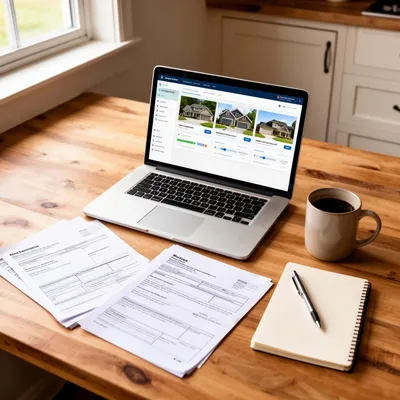
Most brokers and banks around Ottawa want the same basic package:
- Your two most recent pay stubs (or a T4 and Notice of Assessment if your income varies)
- A letter from your employer confirming role, salary, and start date
- Two years of tax returns and Notices of Assessment if you're self-employed
- 90 days of statements for whichever account holds your down payment
- Photo ID and your SIN
- A list of your debts — credit cards, lines of credit, student loans, car loans
How lenders figure out your maximum
Lenders lean on two ratios. Gross Debt Service (GDS) compares your housing costs to your gross income and is capped around 39%. Total Debt Service (TDS) compares all your debt payments to gross income, capped around 44%.
"Housing costs" here means mortgage principal and interest, property tax, heat, and half of any condo fees.
Every number also has to pass the federal stress test: you need to qualify at whichever is higher — your contract rate plus 2%, or 5.25%.

What the stress test looks like in practice
Say your actual rate is 4.49%. The stress-test rate would be 6.49%. On a $570,000 mortgage over 25 years, the payment at 4.49% is about $3,160 a month; at 6.49% it's closer to $3,820. You have to qualify against that higher $3,820 figure, even though you'd never actually pay it.
In practice, this usually shrinks your maximum borrowing power by 15–20% compared to the rate you're actually offered.
How the process runs, start to finish
1. Choose a broker or a bank (a broker usually serves first-time buyers better). 2. Send in your documents. 3. Your broker pulls credit and shops it to lenders. 4. A lender comes back with a maximum price and rate hold, usually within 1–3 business days. 5. You get a pre-approval letter to hand to your realtor. 6. You tour homes knowing your real budget. 7. Once you find one, the lender re-checks everything and issues a firm commitment.
Why most first-time buyers here go with a broker
A broker shops your file across banks, monolines, and credit unions at no cost to you, while a bank can only offer you its own products.
Brokers tend to matter most if you're self-employed, buying new construction with a long rate hold, have income that doesn't fit a standard mould, or want a longer 30-year amortization on an insured mortgage.
Happy to introduce you to a few brokers I work with regularly who focus on first-time buyer files.
How long the whole thing takes
Typically 1–3 business days after your documents are in. The rate hold itself usually runs 90–120 days, sometimes 120–150 for new construction. If you haven't bought by the time it expires, you can get pre-approved again — just at whatever rate is current then.
Slip-ups worth avoiding
Mistaking a rate hold for a pre-approval. Opening new credit during the hold — even one hard inquiry can shift your file. Changing or leaving a job mid-hold. Shuffling your down payment between accounts without a paper trail. Adding a co-buyer late, since that resets the underwriting.
Questions People Ask
A few common questions
- How long does pre-approval take in Ottawa?
- Usually 1–3 business days once your income, employment, credit consent, and down-payment proof are with your broker or bank.
- Should I go with a broker or my own bank?
- Most Ottawa buyers do better with a broker, since a broker shops several lenders while a bank only offers its own products. I can put you in touch with brokers who specialize in first-time buyers, self-employed clients, or new construction.
- Is a rate hold the same thing as pre-approval?
- No. A rate hold just reserves a rate for 90–120 days without checking your finances. Pre-approval is the actual verification step, and it's what gives you a real maximum purchase price.
- Can I still get turned down after being pre-approved?
- Yes — pre-approval is conditional. Once you have an accepted offer, the lender re-checks your file and reviews the property itself (appraisal, condo status certificate) before issuing the firm commitment. Avoid changing jobs or taking on new credit while your rate hold is active.
- What happens if rates drop after I'm pre-approved?
- Most lenders will give you the lower rate at closing if it dropped within your hold period. Worth confirming directly with your broker.
- Does pre-approval affect my credit score?
- There's one hard credit pull, which has a small, short-lived effect. Multiple pulls for the same type of loan within about 30 days are usually counted as a single inquiry.
Keep Reading
First-Time Home Buyer Ottawa
The complete first-time buyer playbook.
Read moreDown Payment Guide Ottawa
How much to save before pre-approval.
Read moreCMHC Insurance Guide
What the premium does to monthly payment.
Read moreOttawa Closing Costs Guide
Cash you'll need at closing.
Read moreHow to Buy Your First Home in Ottawa
Where pre-approval fits in the full process.
Read moreOttawa Mortgage Guide (pillar)
Rates, fixed vs. variable, broker vs. bank.
Read moreStraight From the Source
Check the numbers yourself
These are the official sources I use for current Ottawa real estate data, government programs and buyer protection.
Want an introduction to an Ottawa mortgage broker?
I'll connect you with a broker suited to your situation — first-time buyer, self-employed, or new construction.
Any prices, rates, market figures or value estimates on this page are for general information only, based on the assumptions shown, and are not legal, tax, mortgage or financial advice or an offer of credit. Actual rates, payments, taxes, fees and values vary — confirm the numbers with your lender, lawyer or accountant before relying on them. Full disclosures.
Ottawa in focus
What the city actually looks like